

By Sirjana| 5 June 2026 | Careerfinders.co
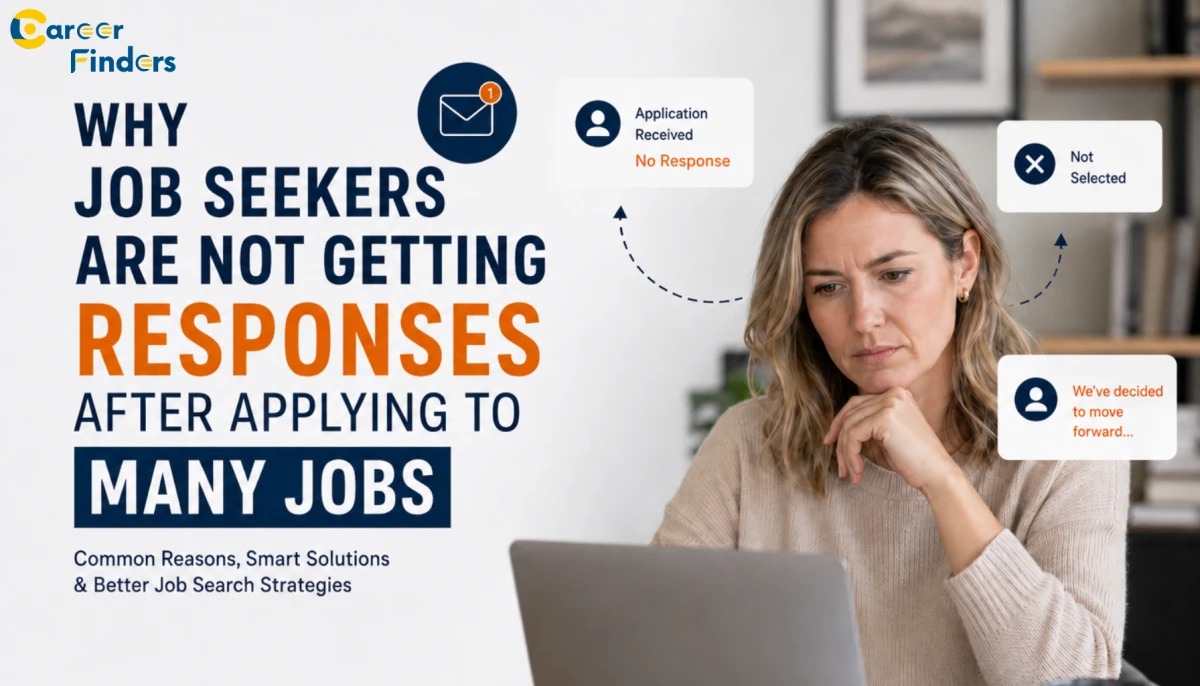
Many job seekers spend hours applying for jobs but still do not receive interview calls. They submit resumes, fill out online forms, upload cover letters and wait for replies. But after days or weeks, the result is often the same: no response, no update and no clear feedback.
This can feel frustrating and confusing.
The problem is not always that the candidate is not capable. In many cases, the real problem is that the job search strategy is weak. A candidate may be applying for too many roles without checking whether the resume, skills and experience actually match the employer’s expectations.
In today’s job market, applying for more jobs is not enough. Job seekers need to apply smarter, present their skills clearly and use platforms like CareerFinders.co to search for opportunities with better direction.
Many candidates believe that if they apply for 50 jobs, they will have a better chance than someone who applies for 10 jobs. Sometimes that can be true, but only if the applications are relevant and well prepared.
The problem starts when job seekers apply everywhere without a plan.
A person may apply for customer service, administration, sales, warehouse, hospitality, marketing and data entry jobs all in the same week. But if the resume does not clearly match any one role, employers may not understand the candidate’s real direction.
Employers want to quickly see:
If this information is unclear, the application may be ignored even if the candidate has potential.
A strong job search is not about applying everywhere. It is about applying where your profile makes sense.
One of the most common reasons job seekers do not get responses is that they use the same resume for every role.
A general resume may save time, but it does not always help the candidate stand out. Employers usually scan resumes quickly. If they cannot find the right keywords, experience or skills within a short time, they may move to the next applicant.
For example, if a candidate is applying for an administration role, the resume should highlight:
But if the same resume is also being used for hospitality, retail and sales jobs, the important admin skills may not be clear enough.
A resume should be adjusted according to the role. It does not mean writing everything again from zero. It means changing the summary, skills and experience points to match the job description.
Employers are not only asking, “Who needs a job?”
They are asking, “Who can help our business?”
This is where many job seekers miss the point. A resume should not only list duties. It should show value.
Instead of writing:
“Worked in customer service.”
A stronger line would be:
“Handled customer enquiries, resolved complaints and supported daily service operations in a fast-paced environment.”
Instead of writing:
“Used computer systems.”
A stronger line would be:
“Maintained customer records, updated reports and used digital systems to support daily administration tasks.”
Small changes can make a resume look more professional and more relevant.
Many candidates struggle because they do not know what kind of role they really want.
They may say, “I am open to anything.”
But employers usually prefer candidates who appear focused.
Being flexible is good, but being unclear is not. If a candidate applies for completely different roles without adjusting the resume, it can create confusion.
Career direction helps job seekers understand:
A focused candidate can write a better resume, prepare better interview answers and make a stronger impression.
A smarter job search starts with filtering opportunities properly. Candidates should not apply only because a job is available. They should check whether the role matches their skills, location, experience and career goals.
Before applying, job seekers should ask:
If the answer is mostly yes, the job is worth applying for.
If the answer is no, it may be better to skip that role and focus on a stronger match.
CareerFinders.co can help candidates explore jobs across Australia and New Zealand with better direction, instead of wasting time on random applications.
Many candidates do not read job descriptions properly. They only look at the title and apply quickly.
This is a mistake.
The job description tells candidates what the employer actually wants. It usually includes skills, responsibilities, qualifications, work type and expectations.
A smart candidate reads the job description and then adjusts the resume accordingly.
For example, if a job ad repeatedly mentions “communication,” “customer handling” and “problem solving,” the resume should show examples of these skills.
If a job ad mentions “reporting,” “data entry” and “administration support,” the resume should highlight those abilities clearly.
The goal is to make it easy for the employer to see the match.
Employers value candidates who can show practical workplace skills. These skills are important across many industries, including customer service, administration, hospitality, sales, operations, education support, IT and business services.
Important skills include:
For many roles, employers are not only looking for perfect experience. They also want candidates who are dependable, trainable and ready to work.
A candidate who shows the right attitude and clear skills can often stand out.
A resume is important, but it is not the only thing employers may check. Many employers also look at a candidate’s online presence, especially LinkedIn or job platform profiles.
An incomplete profile can reduce trust.
Job seekers should make sure their online profile includes:
A strong online profile helps employers understand the candidate faster.
If a candidate uses CareerFinders.co or similar job platforms, their profile should be clear and updated before applying.
Timing also matters in job search.
Some candidates wait too long before applying. By the time they submit the application, many other candidates may already be in the process.
Job seekers should check new opportunities regularly and apply early when a role is suitable.
But speed should not mean carelessness.
A fast but poor application may not help. A better approach is to prepare a strong base resume, then quickly customise it for suitable jobs.
This saves time and improves quality.
There are many reasons why a candidate may not receive a response.
Some common reasons include:
Not every rejection means the candidate is weak. Sometimes the application simply did not present the candidate properly.
The resume summary is one of the first things employers read. A weak summary can reduce interest.
Avoid writing generic lines like:
“Hardworking person looking for a good job.”
A stronger summary would be:
“Motivated customer service professional with experience handling enquiries, supporting daily operations and communicating with customers in fast-paced environments.”
For administration roles:
“Detail-focused administration assistant with experience in data entry, scheduling, document management and customer communication.”
For hospitality roles:
“Reliable hospitality worker with experience in customer service, food preparation, team support and maintaining service standards.”
A strong summary tells the employer exactly where the candidate fits.
Many job seekers ignore cover letters. But for some roles, a short and clear cover letter can improve the application.
A cover letter should not repeat the whole resume. It should explain:
A good cover letter should be simple, professional and specific.
Example:
“I am interested in this role because my experience in customer support and daily administration matches the responsibilities listed in the job description. I am confident in handling enquiries, maintaining records and supporting team operations.”
This is better than a generic message that can be sent to any employer.
Many job seekers apply for many roles but do not track them. Later, if an employer calls, they may not even remember the job.
This creates a poor impression.
Candidates should track:
Tracking applications helps candidates stay organised and professional.
It also helps them understand what is working. If a certain type of role gets more responses, the candidate can focus more on that direction.
Many candidates wait until they receive an interview invitation before preparing. But interview preparation should start earlier.
Job seekers should prepare answers for common questions such as:
Prepared candidates sound more confident and professional.
A good interview answer should be clear, honest and connected to the role.
At the end of the working week, candidates should take time to review their job search. This helps them start the next week with better direction.
A useful review can include:
This simple habit can make the job search more organised and less stressful.
CareerFinders.co helps job seekers explore opportunities with more clarity. Instead of searching without direction, candidates can use the platform to find jobs, explore companies and look for roles that match their goals.
For job seekers, CareerFinders.co can support:
The platform can help candidates move from random searching to more focused career action.
Job searching can affect confidence, especially when candidates receive no replies. But a lack of response does not always mean lack of ability.
Sometimes the strategy needs improvement.
When candidates update their resume, apply for suitable roles, track applications and prepare properly, they feel more in control.
Confidence grows when the process becomes clear.
A better job search is not about panic. It is about planning.
Many job seekers are not getting responses because they are applying without a clear strategy.
The modern job market rewards candidates who are prepared, focused and professional. Employers want to see clear skills, relevant experience and genuine interest in the role.
Applying for more jobs may feel productive, but applying for the right jobs with a stronger resume is more effective.
CareerFinders.co helps job seekers explore opportunities across Australia and New Zealand and take a more focused approach to career growth.
The message is simple:
Do not just apply more.
Apply better.
Show your value clearly.
Build your career with direction.
(1) Job seekers are facing tougher competition, and creative profile-building is becoming important because many applications are now screened through AI systems
https://www.theguardian.com/money/2026/may/28/gen-z-using-social-media-in-struggling-job-market
(2) Targeted job searches are performing better than mass applications in a selective job market
https://www.forbes.com/sites/lucianapaulise/2026/01/14/how-to-get-a-job-in-2026-targeted-job-searches-beat-mass-applications/
(3) Many resumes are filtered by AI/ATS before a human recruiter reviews them, so resume keywords and formatting matter
https://www.techradar.com/pro/75-of-resumes-never-reach-a-human-heres-the-hidden-reason-your-application-is-getting-rejected-by-ai
(4) Job seekers should be careful because scammers are impersonating real recruiters and using genuine-looking profiles
https://www.wsj.com/lifestyle/careers/scammers-are-stealing-recruiters-identities-to-target-job-seekers-7d5b2c96
(5) Employers are moving toward skills-based hiring, so candidates should highlight practical skills instead of only job titles or degrees
https://www.linkedin.com/business/talent/blog/talent-acquisition/how-to-get-started-with-skills-based-hiring