

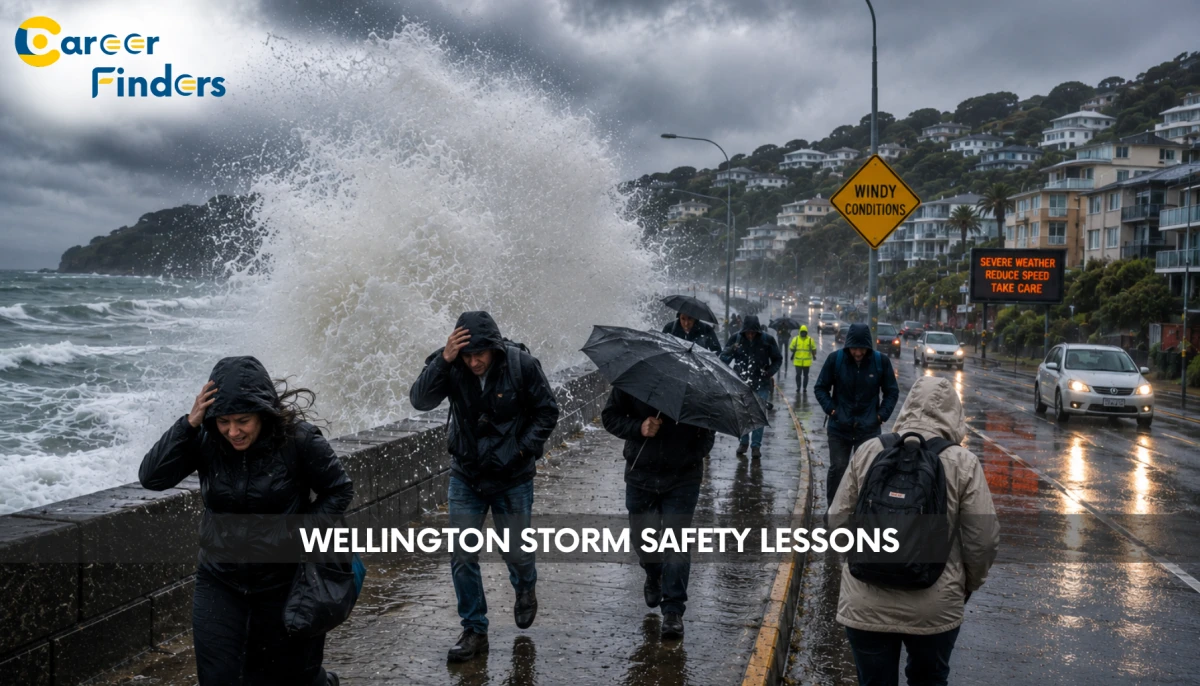
Severe weather in Wellington has again shown how quickly natural conditions can affect work, study, travel and daily life. Heavy southerly swells, dangerous coastal conditions and emergency warnings across parts of the Wellington region have created disruption for residents, commuters, businesses, students and local services.
At first, this may look like only a local weather story. But for employers, workers, job seekers, students and education providers, it carries a bigger message. Modern work and study environments must be ready for sudden disruption. Whether the cause is severe weather, public transport cancellation, road closures, coastal flooding or emergency evacuation advice, people need clear communication and flexible planning.
For CareerFinders readers, this Wellington weather event is an important reminder that safety, adaptability and workplace readiness are now part of career life.
Wellington is known for strong winds and changing coastal conditions, but severe southerly swells can create more than just rough seas. When waves become dangerous, they can affect coastal roads, ferry services, walking routes, public transport, residential areas and workplaces near exposed locations.
For people travelling to work or study, even a short weather disruption can create major problems. A student may miss a class or exam. A worker may be unable to reach a shift safely. A job seeker may have an interview affected by transport delays. A business may have to close early, delay deliveries or move staff to remote work.
This is why severe weather is not only a community safety issue. It is also an employment, education and business continuity issue.
Employers have a responsibility to think beyond normal business operations during severe weather. When conditions become unsafe, asking staff to travel through risky areas can create unnecessary danger.
Bad weather can affect workers in different ways. Office workers may be able to work from home. Retail and hospitality staff may depend on public transport. Construction workers, delivery drivers, cleaners, security guards, road workers and field technicians may face higher exposure because their jobs require travel or outdoor work.
A strong employer response should include a clear safety-first decision-making process. Managers should know when to delay shifts, close worksites, allow remote work or adjust rosters. Employees should not be left guessing whether they are expected to travel during dangerous conditions.
Employers should prepare a severe-weather policy that explains:
• How staff will receive emergency updates
• Who decides if a workplace should close
• Which roles can work remotely
• What happens if public transport is cancelled
• How leave or roster changes will be handled
• What safety checks are needed before outdoor work continues
• How staff should report travel or safety concerns
Clear planning helps businesses continue where possible while protecting employees from avoidable risk.
Students are also affected by severe weather. Many students rely on buses, trains, ferries, walking routes or shared transport to reach campus. When roads or coastal areas become unsafe, students may face delays, cancellations or the need to stay home.
Education providers should make communication simple and early. If classes, exams, workshops or placements are affected, students need updates before they begin travelling. Online learning options can also help reduce disruption during weather emergencies.
Students should also take responsibility for checking official alerts before travelling. If the weather is unsafe, it is better to contact the school, college, university or training provider early rather than take a risk.
For international students and new residents, severe weather events can also be a learning moment. Understanding local emergency advice, public transport updates and safety procedures is part of settling into life in New Zealand.
For job seekers, severe weather can create extra stress. An interview may be scheduled on the same day as a weather warning. Public transport may be delayed. Roads may be blocked. Phone signal or internet access may be affected.
The best approach is professional communication. If travel is unsafe, job seekers should contact the employer or recruiter as early as possible and request a video interview or rescheduled time.
A simple message can help:
“Due to the severe weather warning and transport disruption in Wellington, I may not be able to travel safely to the interview. Would it be possible to attend by video call or reschedule?”
Most employers will understand when safety is the reason. In fact, how a person communicates during disruption can show good judgement, responsibility and professionalism.
Remote work is often discussed as a lifestyle option, but severe weather shows another side of flexibility. It can also be a safety tool.
When employers already have remote work systems in place, they can respond faster during disruption. Staff can continue essential tasks from home. Meetings can move online. Recruiters can continue interviews through video calls. Managers can coordinate teams without forcing unnecessary travel.
Not every job can be remote, but every workplace can still improve communication. Even businesses that require on-site staff can prepare backup rosters, emergency contact lists, safe travel guidance and clear reporting procedures.
The key lesson is that flexibility is no longer only about convenience. It is part of resilience.
Outdoor workers are among the most vulnerable during severe weather. Construction teams, delivery drivers, traffic controllers, maintenance workers, council staff, emergency responders, port workers and field service employees may face direct exposure to high winds, flooding, debris and unsafe roads.
Employers in these sectors should review risk assessments before each major weather event. Work should not continue as normal if the conditions have changed significantly.
Important safety steps include:
• Checking official weather and emergency updates
• Postponing non-essential outdoor work
• Avoiding exposed coastal roads and low-lying areas
• Keeping workers updated throughout the day
• Providing safe transport guidance
• Making sure staff can stop work if conditions become unsafe
• Checking that protective equipment is suitable
• Confirming workers have a way to contact supervisors
A workplace culture that allows people to speak up about unsafe conditions can prevent serious harm.
Severe weather does not only affect people living near the coast. It can also disrupt the wider economy.
If ferries are cancelled, freight and passenger movement can be delayed. If coastal roads are affected, workers may arrive late or not at all. If public transport changes, businesses may need to adjust opening hours. If schools or campuses are affected, parents may need to stay home with children.
This creates a chain reaction across workplaces, education providers and service industries.
That is why employers should avoid blaming workers for delays caused by genuine weather disruption. A practical approach is better: communicate early, adjust expectations and focus on safety.
The best time to prepare for weather disruption is before the next warning is issued. Employers can use this Wellington event as a reason to review their emergency and business continuity planning.
Every workplace should consider:
• Is our staff contact list updated?
• Do employees know who to contact during disruption?
• Can some roles work from home during emergencies?
• Do managers know how to approve flexible work quickly?
• Do we have a template message for severe weather updates?
• Are outdoor work risks reviewed before each shift?
• Do we know which workers rely on public transport?
• Are our health and safety procedures clear enough?
A small amount of preparation can reduce confusion when a real emergency happens.
Students and workers should also build personal preparedness habits. Severe weather can happen quickly, and having a simple plan can make a big difference.
Before travelling during a weather warning, people should:
• Check official weather and transport updates
• Avoid beaches, harbours and exposed coastal areas during dangerous swells
• Charge phones and power banks
• Keep emergency contacts saved
• Contact employers or education providers early if travel is unsafe
• Allow extra travel time where travel is still safe
• Avoid taking photos or videos in dangerous coastal areas
• Follow Civil Defence, council and transport authority advice
Good communication is important. Employers, tutors and recruiters are more likely to help when they receive early, clear updates.
This weather event also highlights an important career skill: adaptability.
In today’s world, work and study can be interrupted by weather, technology issues, transport problems, public health events and economic disruption. People who can stay calm, communicate clearly and adjust quickly are valuable in almost every industry.
For students, this means learning how to manage disruption professionally. For workers, it means understanding safety responsibilities and workplace communication. For employers, it means building systems that support people during unexpected events.
Resilience is not only a personal quality. It is also an organisational strength.
New Zealand workplaces are increasingly expected to think about climate risk, emergency planning and employee wellbeing. Severe weather events can affect hiring, rosters, productivity, workplace safety and business operations.
This creates demand for skills in areas such as:
• Health and safety management
• Emergency coordination
• Transport and logistics planning
• Construction safety
• Infrastructure maintenance
• Remote work technology
• Human resources and workforce planning
• Community support services
• Environmental and climate risk planning
For students choosing future careers, weather-related disruption shows that practical, safety-focused and problem-solving roles will remain important.
Wellington’s severe southerly swell warning is more than a local weather update. It is a reminder that work, education and transport are all connected to community safety.
Employers need clear emergency plans. Students need reliable communication from education providers. Workers need safe travel options and practical support. Job seekers need flexibility when interviews are affected by disruption.
The biggest lesson is simple: safety should come before routine. When weather conditions become dangerous, good planning and clear communication can protect people, reduce stress and keep workplaces moving where it is safe to do so.
For CareerFinders readers, this story is a timely reminder that career readiness is not only about qualifications and experience. It is also about responsibility, adaptability and knowing how to respond when unexpected events affect work and study.
(1) Wellington City Council – State of Emergency for South Coast
https://wellington.govt.nz/news-and-events/news-and-information/our-wellington/2026/06/state-of-emergency-south-coast
(2) Hutt City Council – 9 June High Swell Alert
https://www.huttcity.govt.nz/people-and-communities/news/2026/9-june-high-swell-alert
(3) 1News – State of Emergency and Evacuations Due to 10m Swells
https://www.1news.co.nz/2026/06/09/state-of-emergency-evacuations-as-swells-of-up-to-10m-to-batter-nzs-east/
(4) MetService New Zealand – Official Weather Warnings
https://www.metservice.com/warnings/home
(5) WorkSafe New Zealand – Working in Extreme Outdoor Conditions
https://www.worksafe.govt.nz/topic-and-industry/natural-events-and-emergencies/working-in-extreme-outdoor-conditions/