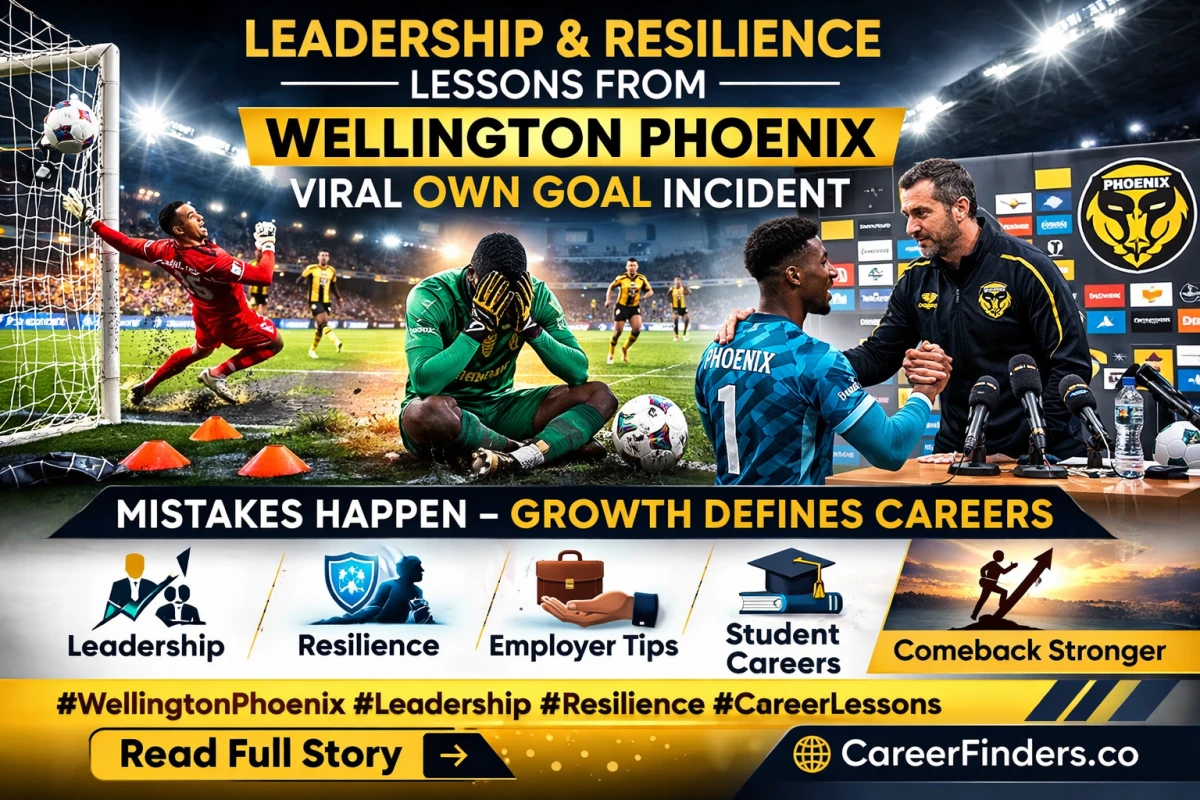
A recent A-League Men match involving Wellington Phoenix captured global attention after goalkeeper Josh Oluwayemi scored a viral own goal during a heavy defeat. The incident quickly spread across social media, becoming one of the most talked-about moments in A-League Men this season.
While sports headlines focus on the mistake, there are deeper career and workplace lessons that employers, students, and professionals can apply.
1. One Mistake Does Not Define a Career
In professional football, errors are public and amplified. In corporate life, mistakes may not go viral, but they can still feel overwhelming.
For students and jobseekers:
A failed interview does not end your career.
A project error does not define your capability.
Growth comes from recovery, not perfection.
For employers:
Talent development requires patience.
Performance should be evaluated over time, not one incident.
Strong organisations protect confidence during setbacks.
High-performing companies understand that resilience builds long-term value.
2. Leadership Response Matters More Than the Error
When crises occur, leadership behaviour becomes visible.
In sport:
Coaching strategy
Team morale
Public communication
In business:
Managerial support
Internal communication
Decision-making under pressure
Employees follow leaders who provide stability during difficult moments. Organisations that demonstrate composed leadership attract stronger talent in competitive job markets.
3. Pressure Management Is a Career Skill
Professional athletes operate under intense pressure. Modern workplaces are no different.
Industries such as:
Finance
Technology
Healthcare
Engineering
Media
All require professionals who can perform under scrutiny.
Students entering internships or graduate roles should actively develop:
Emotional control
Accountability
Communication clarity
Mental resilience
These traits increase employability far more than technical skills alone.
4. Reputation Recovery and Personal Branding
In the digital age, public perception spreads quickly. However, careers are long.
Professionals can recover by:
Demonstrating consistent improvement
Staying disciplined
Avoiding defensive reactions
Showing maturity in adversity
Employers increasingly value individuals who can navigate criticism without losing focus.
5. What Employers Can Learn
Recruiters and HR leaders should evaluate:
How do we respond to employee mistakes?
Do we build confidence or create fear?
Are performance reviews balanced and data-driven?
Companies known for supportive leadership retain talent longer and attract higher-quality applicants.
Career Takeaway for Students and Jobseekers
Every career includes setbacks. What determines success is:
Response speed
Emotional intelligence
Willingness to learn
Consistency after failure
Resilience is now a core employability skill.
Why This Matters for CareerFinders.co
At CareerFinders.co, we focus on connecting talent with employers who value:
Growth mindset
Leadership development
Professional resilience
Long-term performance
Whether you are a student starting your journey or an employer building a high-performance team, moments of adversity reveal character.
Explore opportunities that prioritise development, mentorship, and sustainable career growth at:
Mistakes happen in high-pressure environments. Strong leadership is measured by how managers respond. Supporting employees after setbacks builds loyalty, improves morale, and strengthens long-term performance.
Avoid emotional reactions. Conduct internal review, provide private feedback, offer corrective training, and communicate transparently. A calm response protects both company reputation and employee confidence.
Technical skills can be trained. Emotional resilience and accountability are harder to build. Candidates who recover quickly from failure are more valuable in dynamic industries.
Acknowledge the mistake, take responsibility, fix the issue, and demonstrate improvement. Defensive behaviour damages credibility more than the original error.
Not if handled properly. Consistent performance after a setback often strengthens reputation by showing maturity and stability under pressure.
Accountability, composure, learning ability, and consistency. Professionals who stay calm and solution-focused stand out in competitive markets.
One mistake does not define your future. Career growth depends on how you respond, adapt, and improve after setbacks.
Take internships, handle real responsibilities, accept feedback openly, and learn to manage criticism without losing focus.
Understanding leadership dynamics helps you choose better employers, mentors, and career environments that support growth rather than create fear.