

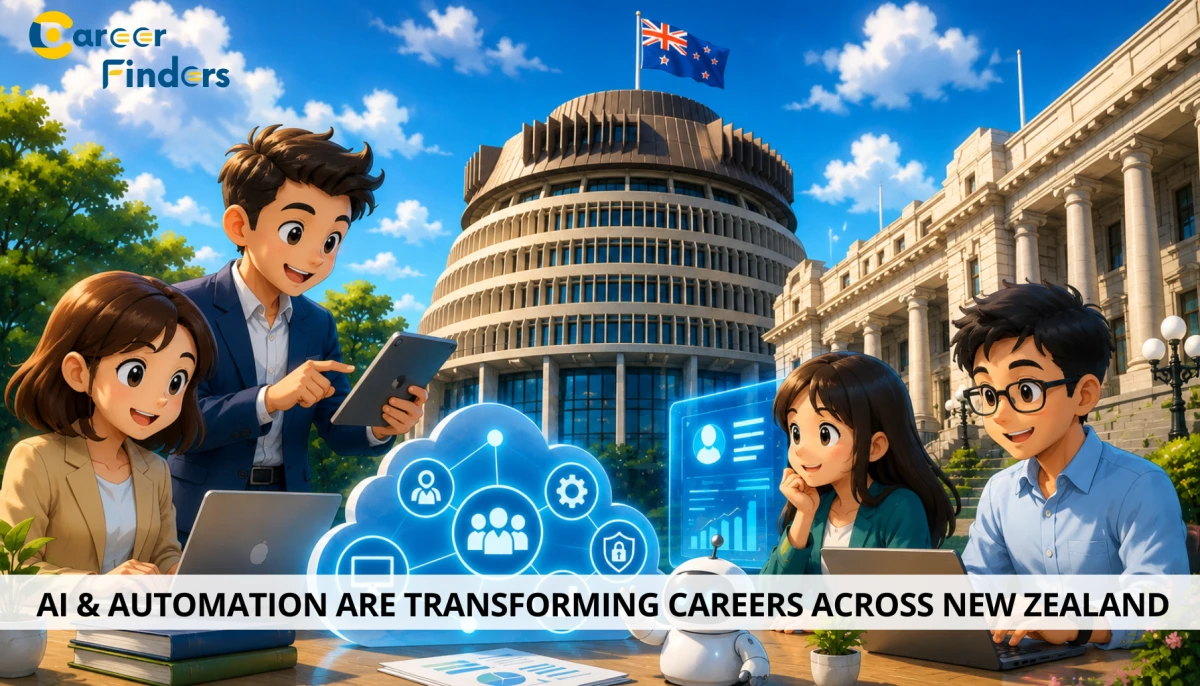
The New Zealand Government is preparing one of the biggest public-sector restructures in recent years — and the impact could extend far beyond government offices. Finance Minister Nicola Willis has proposed centralising HR, payroll, IT systems, procurement, and administrative operations across government departments while aggressively expanding the use of AI and digital automation.
For employers, students, international graduates, and professionals watching global hiring trends, this is more than a government cost-cutting exercise. It reflects a broader shift happening worldwide — where organisations are replacing fragmented systems with centralised digital infrastructure, AI-powered workflows, and leaner operational models.
According to reports, New Zealand aims to save approximately NZ$2.4 billion over the next few years while reducing nearly 8,700 public-sector roles through restructuring, digitisation, and automation initiatives.
The proposed reforms would centralise many administrative functions that are currently duplicated across dozens of government departments. Finance Minister Nicola Willis specifically highlighted that the public sector currently operates dozens of separate HR systems and support functions that may eventually be merged into shared services.
The overhaul focuses on three major areas:
The New Zealand Government says AI and digital systems should become a “basic expectation” for public entities moving forward.

This includes:
The move mirrors trends already happening across Australia, the UK, Singapore, Canada, and many private-sector organisations globally.
For employers, especially in technology, recruitment, logistics, education, finance, and administration sectors, this news highlights where the workforce market is heading.
Modern businesses are increasingly prioritising:
Companies that adapt early may gain a significant operational advantage.
Employers are now searching for candidates who can work alongside technology rather than compete against it.
Skills becoming increasingly valuable include:
Students entering the workforce over the next few years may experience a completely different job market compared to previous generations.
Many entry-level administrative roles may gradually shrink as AI systems automate repetitive tasks.
However, entirely new opportunities are emerging.
The restructuring trend is likely to increase demand in:
Students who combine technical knowledge with communication and business skills may become highly employable.
International students planning careers in Australia or New Zealand should especially focus on:
The same technologies transforming governments are also changing recruitment itself.
Many employers now rely heavily on:
This means job seekers must optimise their resumes for both recruiters and AI systems.
Candidates should focus on:
Employers increasingly value candidates who can adapt quickly to new technology-driven workflows.
The New Zealand Government’s plan may influence private-sector organisations to accelerate similar transformations.
Historically, governments have often moved slowly with digital transformation. However, the push toward AI integration signals that even traditionally large institutions now see automation as essential for long-term sustainability.
This could create ripple effects across:
Organisations that help businesses modernise operations may see increased demand in coming years.
One major debate surrounding the reforms is whether AI will eliminate jobs entirely or simply transform existing roles.
Critics argue that thousands of job cuts could negatively impact workers and public services.
Supporters believe automation will reduce duplication, improve efficiency, and redirect resources toward frontline services like healthcare, education, infrastructure, and policing.
The reality is likely somewhere in between.
Many repetitive administrative roles may decline, but demand for digitally skilled professionals may continue growing rapidly.
The workforce of the future may not necessarily be smaller — but it will almost certainly be more technology-focused.
At CareerFinders.co, we are already seeing increased employer interest in candidates with:
For students and professionals, the takeaway is simple:
The future workforce will reward candidates who continuously upgrade their skills and embrace digital transformation rather than resist it.
As governments and businesses worldwide accelerate AI adoption, professionals who combine technical understanding with human problem-solving skills may become the strongest candidates in tomorrow’s job market.
#NewZealand #AIJobs #FutureOfWork #DigitalTransformation #Recruitment #ATS #CloudComputing #CareerFinders #ArtificialIntelligence #Automation #Students #Employers #HRTech #TechCareers #JobMarket