

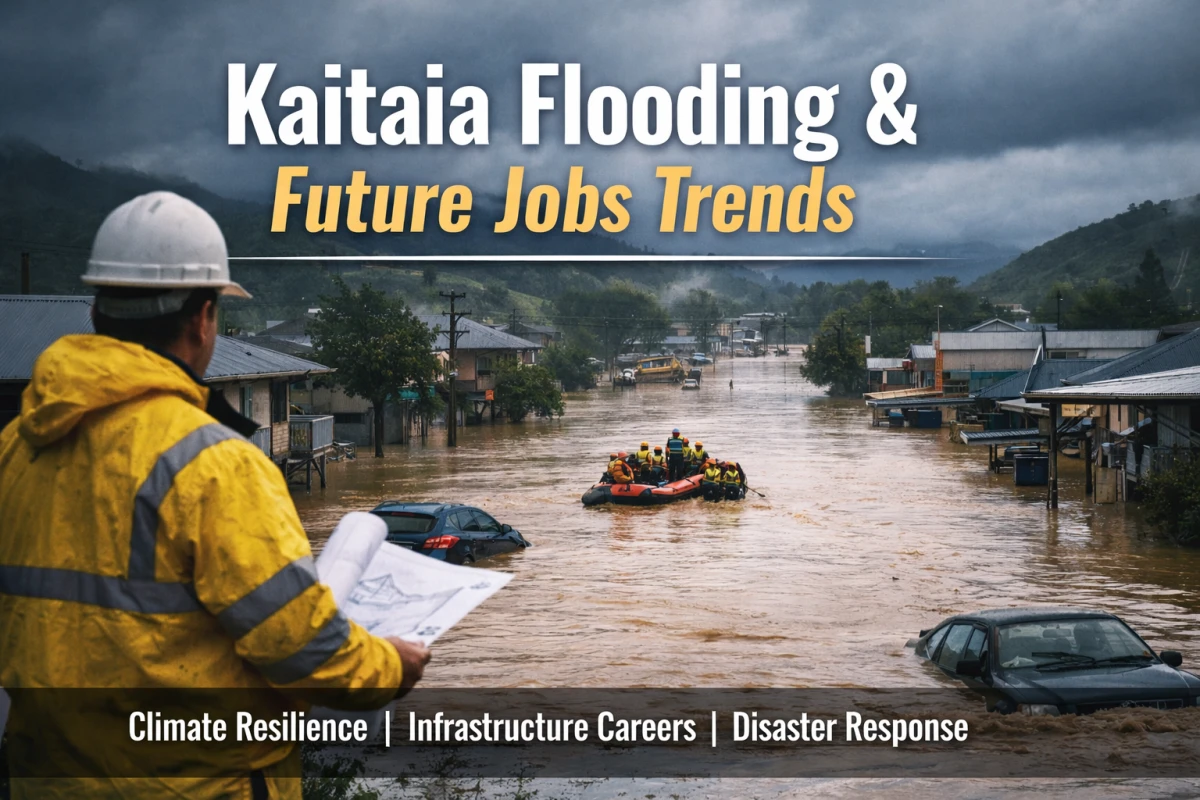
Recent flooding in Kaitāia, New Zealand, has sparked widespread concern after severe weather caused significant damage to a $120 million commercial precinct. Auckland Mayor Wayne Brown publicly criticised regional authorities, raising questions about infrastructure planning and flood management systems.
According to RNZ News report on Kaitaia flooding, the situation highlights serious gaps in preparedness, especially as extreme weather events continue to increase in frequency and intensity.
While the immediate focus remains on recovery and accountability, the broader implications extend into the global job market, education pathways, and business strategies.
Flooding events like this are no longer isolated incidents. Across the world, climate-related disruptions are influencing how economies function and how organisations operate.
From damaged infrastructure to business interruptions, such crises create an urgent demand for:
This signals a major shift where climate resilience becomes a core employment driver.
For jobseekers, this event highlights a growing demand for practical, solution-oriented roles.
Industries expected to see increased hiring include:
Professionals who build expertise in these areas are more likely to secure long-term, stable career opportunities.
Career insight: The future job market will favour individuals who can solve real-world challenges.
Students entering the workforce must recognise that traditional career paths are evolving rapidly.
Key areas of study gaining importance:
Students who align their education with these trends will be better positioned in a competitive job market.
For businesses, the Kaitāia flooding serves as a critical reminder of operational vulnerability.
Companies are now expected to:
Organisations that fail to adapt may face financial losses, operational disruptions, and reputational damage.
At CareerFinders, industry trends indicate a clear transformation:
This shift reflects a broader transition where skills aligned with global challenges are becoming essential.
The Kaitāia flooding is more than a natural disaster—it is a signal of change in how the world works.
It highlights the urgent need for:
For jobseekers, students, and employers, the message is clear:
Adaptation is no longer optional—it is essential.