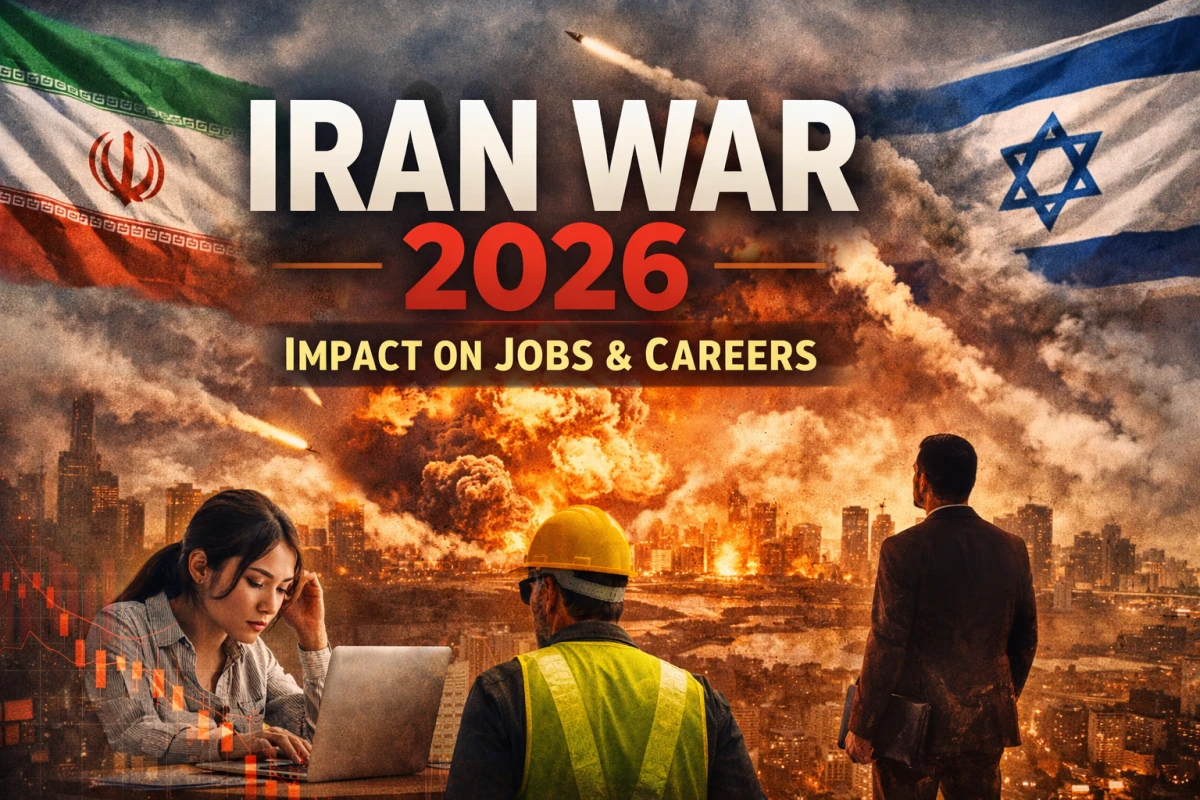
In today’s interconnected world, global conflicts don’t just stay within borders—they ripple across economies, industries, and job markets. The ongoing Iran war in 2026 is one such crisis that is not only shaping geopolitics but also influencing careers, hiring trends, and future opportunities worldwide.
Whether you are a student planning your future, a job seeker searching for stability, or an employer navigating uncertainty, this situation has direct implications for you.
The conflict has escalated rapidly, involving major global powers and leading to rising tensions in the Middle East. With missile strikes, disrupted trade routes, and growing instability, the situation is affecting global markets—especially energy and logistics sectors.
When global uncertainty increases, economic activity slows down—and that directly impacts employment.
During times of uncertainty, companies become cautious. Many businesses reduce hiring or pause recruitment altogether to manage costs and risks.
This leads to:
For job seekers, this means standing out has become more important than ever.
While some industries struggle, others experience growth. Global crises often accelerate demand in specific sectors such as:
Adapting to these industries can create new career opportunities.
Employers are facing significant operational pressures, including:
As a result, companies are prioritizing highly skilled, adaptable, and efficient employees.
For students, this is a crucial time to align education with future job trends. The job market is evolving, and traditional career paths are shifting.
Students should focus on:
Being adaptable is no longer optional—it is essential.
In a changing job market, strategy matters. Job seekers should:
Platforms like CareerFinders.co help connect job seekers with genuine opportunities, especially during uncertain times.
Global events like the Iran war highlight an important truth:
Job security is temporary, but skills are long-term assets.
Those who invest in learning and adaptability will always have an advantage, regardless of global conditions.
The Iran war is not just a geopolitical issue—it is an economic and employment challenge that affects millions of people worldwide.
For students, job seekers, and employers, the key to navigating this uncertainty is staying informed, being flexible, and continuously improving skills.
The future belongs to those who adapt.
2026 Iran War Overview (Wikipedia)
Iran War Explained (Britannica)
Economic Impact of Iran Conflict (Oxford Economics)
#IranWar #GlobalJobs #JobMarket #CareerGrowth #StudentsCareer #HiringTrends #FutureOfWork #CareerFinders #JobSearch #EmploymentNews