

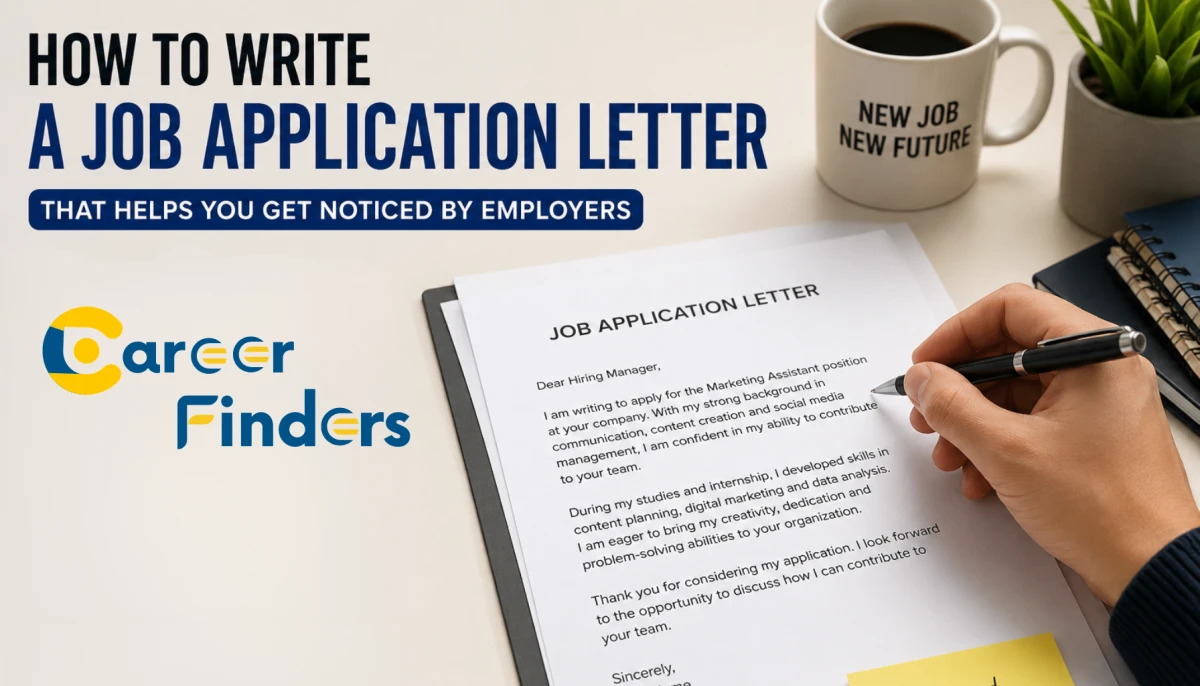
A job application letter can make a big difference when a candidate is trying to stand out in a competitive hiring market. A resume shows skills, experience and qualifications, but an application letter explains why the candidate is interested in the role and how they can add value to the employer.
For students, fresh graduates and job seekers, a strong application letter can help create a professional first impression. For employers, it gives a quick understanding of the candidate’s communication skills, motivation and suitability for the role.
Many candidates apply for jobs with the same resume and a very basic message. This is one of the reasons applications often get ignored. A well-written job application letter shows effort, confidence and genuine interest.
A job application letter is a formal letter sent with a resume when applying for a job. It introduces the candidate, mentions the position they are applying for and explains why they are suitable for the role.
It is also commonly called a cover letter. However, a job application letter is often used in a broader way, especially when candidates apply through email, company websites or job portals.
The main purpose of the letter is not to repeat the resume. Instead, it should highlight the most relevant skills, experience and achievements in a clear and professional way.
Some candidates think employers only look at resumes, but a good application letter can still help. It gives the candidate a chance to speak directly to the employer and explain their interest in the role.
For students and fresh graduates, it can explain academic projects, internships, part-time work, volunteer experience and career goals. For experienced job seekers, it can highlight achievements, leadership skills and industry knowledge.
Employers also use application letters to check how clearly a candidate communicates. A letter with proper structure, correct grammar and relevant details can create a stronger impression than a generic application.
Employers usually do not spend a long time reading every application letter. They quickly check whether the candidate understands the role, has relevant skills and can communicate professionally.
This means the letter should be short, clear and focused. A strong letter should answer three simple questions:
Why is the candidate applying for this role?
What skills or experience make them suitable?
Why should the employer consider them for the next stage?
If the letter answers these questions properly, it can help the candidate move closer to an interview.
A professional job application letter should follow a simple format. The structure should be easy to read and should not look too crowded.
The basic format includes:
Candidate name and contact details
Date
Employer or hiring manager details
Subject line
Professional greeting
Opening paragraph
Main body paragraph
Closing paragraph
Professional sign-off
The letter should ideally be one page long. Long letters can lose the employer’s attention, especially when they are reviewing many applications.
The subject line should mention the job title clearly. This helps the employer understand the purpose of the application quickly.
Example:
Subject: Application for Customer Service Assistant Position
Another example:
Subject: Job Application for Marketing Coordinator Role
A clear subject line is especially important when applying by email. It makes the application look organised and professional.
If the hiring manager’s name is available, use it. This makes the letter feel more personal and direct.
Example:
Dear Ms Taylor,
If the name is not available, use a general but professional greeting.
Example:
Dear Hiring Manager,
Avoid informal greetings such as “Hi there” or “Hello team” in a formal job application letter.
The opening paragraph should quickly explain which role the candidate is applying for and why they are interested.
Example:
I am writing to apply for the Customer Service Assistant position at your company. I am interested in this role because I enjoy helping customers, solving problems and working in a team-focused environment.
This type of opening is simple, clear and directly connected to the job.
Candidates should avoid starting with generic lines such as “I need a job” or “Please find my resume attached.” These lines do not create a strong impression.
The main body of the letter should connect the candidate’s skills with the employer’s requirements. This is the most important part of the application letter.
For example, if the job requires communication skills, customer service and organisation, the letter should mention these points with simple examples.
Example:
In my previous part-time role, I handled customer enquiries, supported daily store operations and worked closely with team members during busy periods. This experience helped me build strong communication, time management and problem-solving skills.
This is better than simply writing “I am hardworking and dedicated.” Employers prefer specific examples because they show real experience.
A good application letter should show that the candidate has read about the company or understands the role. This does not need to be very long. Even one or two lines can make the letter stronger.
Example:
I am interested in joining your organisation because of its focus on customer experience and professional service. I believe my skills and positive attitude would allow me to contribute well to your team.
This shows that the candidate is not sending the same letter everywhere.
The closing paragraph should thank the employer and show interest in the next step.
Example:
Thank you for considering my application. I have attached my resume for your review and would welcome the opportunity to discuss my suitability for the role in an interview.
The closing should sound polite, professional and confident. Candidates should not sound desperate or too casual.
End the letter properly with a formal sign-off.
Example:
Kind regards,
Your Name
Other suitable options include:
Sincerely,
Best regards,
Yours faithfully,
For most modern job applications, “Kind regards” or “Sincerely” works well.
Dear Hiring Manager,
I am writing to apply for the Retail Assistant position at your company. I am currently studying business and looking for an opportunity to gain practical workplace experience while developing my customer service and communication skills.
Through my studies and part-time activities, I have developed strong time management, teamwork and problem-solving skills. I am comfortable speaking with people, handling responsibilities and learning new tasks quickly. I believe these qualities would help me support your team and provide a positive experience to customers.
I am interested in this role because it offers a chance to build real workplace experience in a professional environment. I am reliable, motivated and ready to contribute with a positive attitude.
Thank you for considering my application. I have attached my resume and would appreciate the opportunity to discuss my application further.
Kind regards,
Your Name
Dear Hiring Manager,
I am writing to apply for the Junior Administrative Assistant position at your organisation. I recently completed my studies and am now seeking an entry-level role where I can use my communication, organisation and computer skills in a professional workplace.
During my academic projects and training, I developed strong attention to detail, document handling, scheduling and teamwork skills. I am confident using Microsoft Office tools and can manage tasks with accuracy and professionalism.
I am interested in this position because it offers the opportunity to begin my career in a structured and supportive workplace. I am eager to learn, take responsibility and contribute positively to your team.
Thank you for reviewing my application. I have attached my resume and would welcome the opportunity to speak with you about the role.
Kind regards,
Your Name
Dear Hiring Manager,
I am writing to apply for the Operations Coordinator position at your company. With experience in team coordination, process management and client communication, I am confident in my ability to support your business operations effectively.
In my previous role, I managed daily administrative tasks, coordinated with internal teams and helped improve workflow efficiency. I have strong communication skills, a practical approach to problem-solving and the ability to manage multiple priorities in a busy work environment.
I am interested in this opportunity because your organisation values efficiency, teamwork and professional growth. I believe my experience and work ethic would allow me to make a meaningful contribution to your team.
Thank you for considering my application. I have attached my resume and would be pleased to discuss my suitability for the role.
Kind regards,
Your Name
One of the biggest mistakes candidates make is sending the same letter to every employer. A generic letter does not show real interest. Candidates should change the letter according to the job title, company and required skills.
Another mistake is repeating the full resume. The application letter should only highlight the most relevant points and explain why they matter.
Candidates should also avoid spelling mistakes, wrong company names, very long paragraphs, casual language and unnecessary personal details.
A job application letter should be professional, but it should also sound natural. Employers want to see a real person behind the application.
Students and fresh graduates may not have much work experience, but they can still write a strong application letter. They can focus on education, projects, internships, volunteer work, part-time jobs and transferable skills.
Skills such as teamwork, communication, problem-solving, time management and willingness to learn are valuable for entry-level roles.
The key is to connect these skills with the job. Instead of saying “I have no experience,” candidates should explain what they have learned and how they are ready to apply it in the workplace.
Experienced professionals should focus on achievements, responsibilities and results. They should mention relevant industry experience, leadership ability, technical skills or business impact.
For example, instead of writing “I worked in administration,” a stronger line would be:
I managed office records, supported client communication and improved daily reporting processes for the team.
This gives the employer a clearer idea of the candidate’s value.
Employers should look for application letters that are clear, relevant and specific. A good letter should show that the candidate understands the role and has made an effort to match their background with the job requirements.
For student and graduate roles, employers should focus on attitude, communication and learning ability. For experienced roles, they should look for relevant achievements, problem-solving skills and professional maturity.
A strong application letter does not need to be perfect, but it should show effort, clarity and genuine interest.
A job application letter is more than a formality. It is a chance for candidates to introduce themselves, explain their value and show why they deserve attention from employers.
For students, it can help turn academic experience into a professional story. For fresh graduates, it can support the first step into the workforce. For experienced job seekers, it can highlight career achievements and suitability for the role.
In a competitive job market, a well-written job application letter can help candidates get noticed, create a stronger first impression and move closer to an interview.