

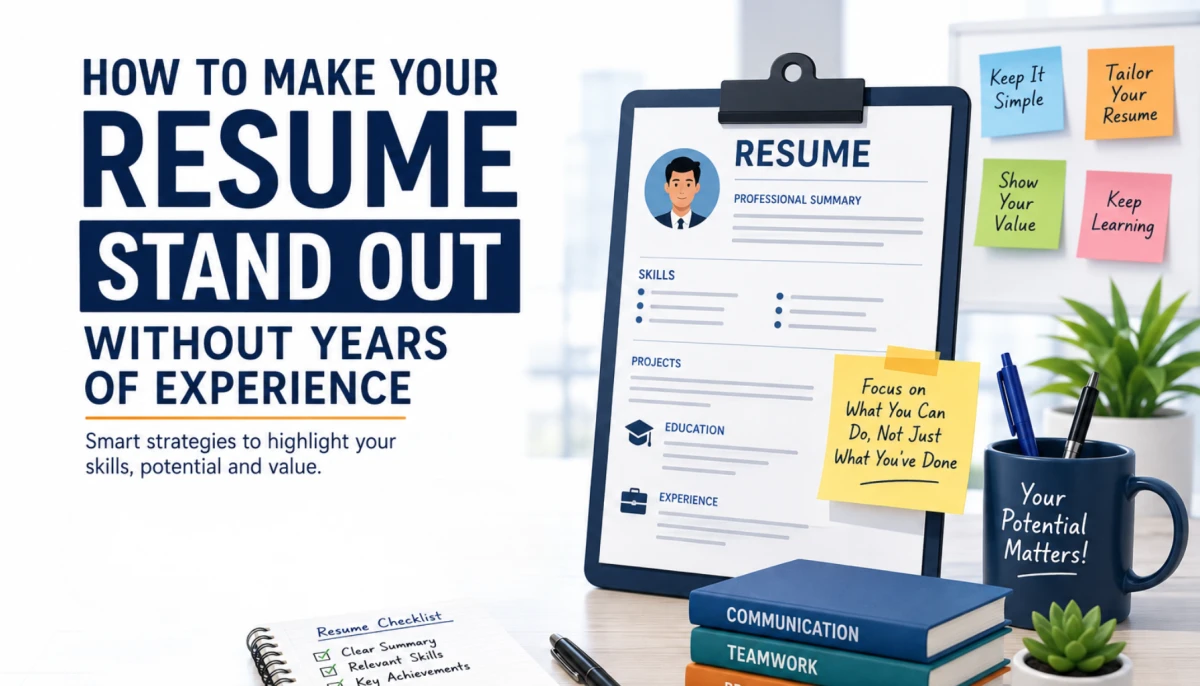
A strong resume is not only about having several years of professional experience. Many students, recent graduates, career changers and entry-level job seekers have valuable skills but struggle to present them effectively.
Employers usually review many applications for each position. A resume that is clear, relevant and easy to scan can make a stronger impression than one filled with unnecessary details. Even with limited or average experience, candidates can stand out by presenting their skills, achievements, projects and potential in the right way.
This guide explains how job seekers can build a stronger resume and how employers can recognise capable candidates beyond job titles and years of experience.
Professional experience is important, but it is not the only factor employers assess. Depending on the role, employers may also look for:
A candidate with limited experience may still be suitable when their resume clearly demonstrates relevant capabilities.
For students and graduates, university assignments, internships, part-time jobs, group projects and community activities can provide useful evidence of job-ready skills.
The professional summary appears near the top of the resume and gives employers a quick introduction to the candidate.
Avoid generic statements such as:
Hard-working individual seeking an opportunity in a successful organisation.
Instead, write a summary that explains:
For example:
Business graduate with experience in customer service, data entry and team-based university projects. Skilled in Microsoft Office, communication and administrative support, with a strong interest in entry-level business operations roles.
This version gives the employer useful information immediately.
Sending the same resume for every role can reduce the chances of getting noticed. Each employer may prioritise different skills, qualifications and responsibilities.
Before applying, carefully read the job description and identify:
Use relevant keywords naturally throughout the resume. This can help both recruiters and applicant tracking systems understand that the application matches the role.
Candidates should not copy the entire job description. The resume must remain honest and should only include skills and experience the applicant genuinely has.
Many resumes simply list routine duties. Employers are more interested in understanding what the candidate achieved or contributed.
Instead of writing:
Helped customers and handled enquiries.
A stronger version could be:
Assisted customers with product enquiries and resolved routine concerns while maintaining friendly and professional service.
Another example:
Instead of:
Worked on a university marketing project.
Write:
Collaborated with four students to develop a marketing campaign, conduct audience research and present recommendations to lecturers.
Even when exact numbers are unavailable, candidates can show their contribution, actions and outcomes.
Part-time jobs may not always be directly related to a candidate’s future career, but they can demonstrate highly valuable transferable skills.
Experience in retail, hospitality, delivery services, administration or customer service may show:
For example, a hospitality worker applying for an office position could highlight customer communication, scheduling, problem-solving and teamwork rather than only listing food-service duties.
Projects are especially valuable for students, graduates and candidates changing careers.
A project section may include:
For each project, briefly explain:
For example:
Website Development Project
Projects provide employers with practical evidence rather than unsupported skill claims.
A clear skills section allows recruiters to quickly identify whether a candidate meets the basic requirements of the position.
Skills may be divided into categories such as:
Technical Skills
Workplace Skills
Only include skills that can be explained or demonstrated during an interview.
Short courses and industry certifications can strengthen a resume, particularly when work experience is limited.
Useful training may include:
Candidates should include the course name, training provider and completion date where appropriate.
Ongoing learning can show employers that a candidate is motivated and prepared to develop professionally.
A resume should be professionally formatted without becoming overly decorative.
Use:
Avoid:
For most students, graduates and early-career professionals, a resume of one or two pages is usually sufficient.
Action words make resume statements sound more direct and professional.
Useful examples include:
Instead of writing “responsible for social media,” a candidate could write:
Created and scheduled social media content to support weekly promotional activities.
Before submitting a resume, candidates should confirm that their contact information is correct.
Include:
LinkedIn profiles should be consistent with the resume. Job titles, employment dates and qualifications should not contradict each other.
A professional online presence can give recruiters additional confidence in the candidate.
Employers may miss promising applicants when job advertisements focus too heavily on years of experience.
When reviewing entry-level applicants, employers can also consider:
Job descriptions should clearly separate essential requirements from preferred requirements. This encourages capable candidates to apply without reducing hiring standards.
Employers can also use practical assessments, structured interviews and skills-based questions to evaluate candidates more fairly.
Candidates should avoid several common problems:
A simple, targeted and accurate resume is usually more effective than a complicated document.
Candidates do not need an exceptional employment history to create an impressive resume. They need to present their available experience strategically.
Relevant projects, part-time jobs, education, volunteer work, certifications and transferable skills can all demonstrate professional potential. The resume should clearly show how these experiences connect with the position being advertised.
Employers can also improve recruitment outcomes by evaluating what candidates can contribute, rather than relying only on previous job titles or years of experience.
Students, graduates, professionals and employers can visit CareerFinders.co to explore career insights, recruitment guidance and employment opportunities.
A well-prepared resume may not guarantee an interview, but it can ensure that valuable skills and potential are not overlooked.
(1) Candidates with little or no professional experience can strengthen their resumes by highlighting education, volunteer work, personal projects and transferable skills
https://www.seek.com.au/career-advice/article/no-experience-heres-what-to-put-on-your-resume
(2) A strong resume profile should focus on job-relevant skills, achievements and abilities, especially when the candidate has limited work experience
https://www.seek.com.au/career-advice/article/resume-profile
(3) Applicant tracking systems scan resumes for information such as skills, job titles and certifications, making clear formatting and relevant keywords important
https://www.indeed.com/career-advice/resumes-cover-letters/ats-resume-template
(4) Skills-based hiring is becoming more common, with 70% of surveyed employers reporting that they use this approach when evaluating candidates
(5) Australian employers are increasingly using skills-based recruitment, giving candidates opportunities to demonstrate their potential beyond qualifications and years of experience
#ResumeTips #CareerAdvice #JobSearchTips #EntryLevelJobs #FreshGraduates #CareerFinders