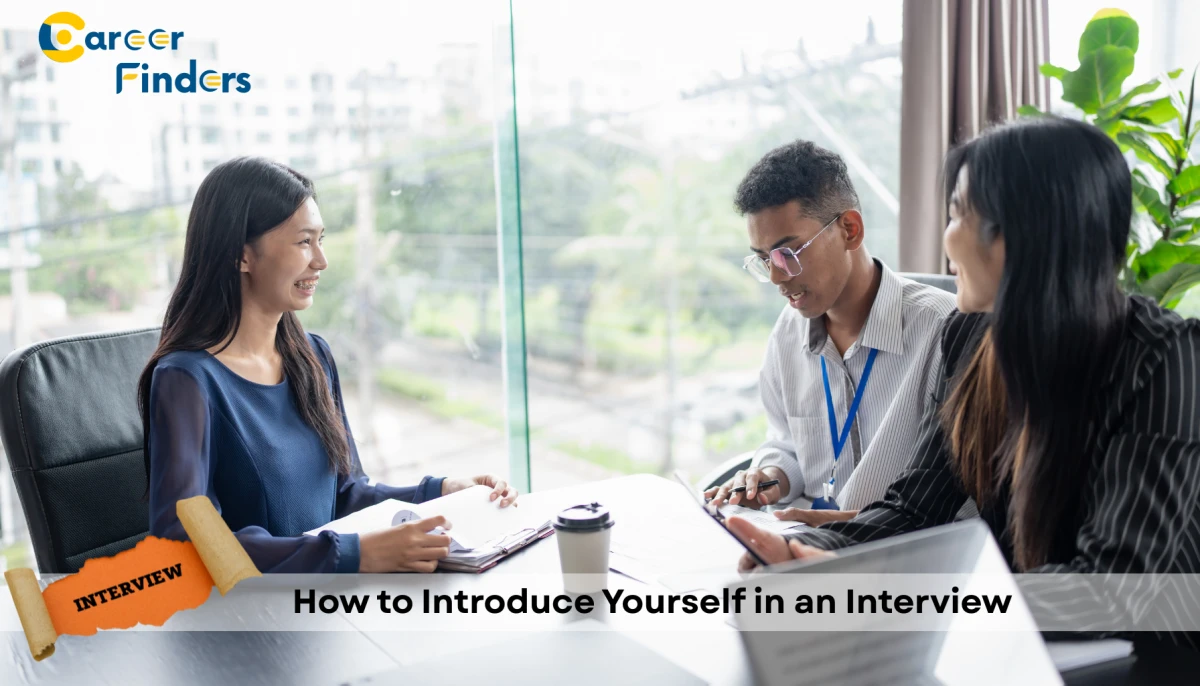
A job interview often starts with a simple question: “Tell me about yourself” or “Please introduce yourself.” Many candidates think this question is easy, but when the interview begins, they suddenly feel nervous and confused about what to say.
Your self-introduction is your first chance to make a strong impression. It helps the interviewer understand your background, skills, confidence and interest in the role. A good introduction does not need to be very long. It should be clear, professional and related to the job.
Whether you are a fresher, student, experienced worker or someone changing careers, a well-prepared self-introduction can help you start the interview with confidence.
Self-introduction is important because it sets the tone for the rest of the interview. Before asking detailed questions, the interviewer wants to know who you are, what you have studied or worked on, what skills you have and why you are interested in the job.
A strong introduction shows that you are prepared and serious about the opportunity. It also helps the interviewer connect your background with the role. When you introduce yourself clearly, you create a positive first impression and make the conversation easier.
A weak introduction, on the other hand, can make you look unprepared even if you have good skills. That is why it is important to practise your answer before the interview.
Your self-introduction should include your name, education or work background, key skills, experience, projects and career interest. You should also mention why you are interested in the role.
If you are a fresher, you can talk about your degree, college projects, internships, certifications, technical skills, communication skills or career goals. You do not need full-time work experience to give a good answer. You just need to show what you have learned and how ready you are to grow.
If you are an experienced candidate, focus on your work experience, responsibilities, achievements and professional strengths. Keep your answer connected to the job you are applying for.
A good self-introduction should follow a simple flow. First, start with your name and background. Then talk about your education or experience. After that, mention your main skills or achievements. Finally, connect your answer with the job role.
For example, you can say:
“My name is Oliver Bennett. I recently completed my Bachelor’s degree in Business Administration. During my studies, I developed a strong interest in marketing and customer communication. I also completed a digital marketing certification and worked on a college project where we created a social media campaign for a local business. I am now looking for an opportunity where I can use my communication and marketing skills and grow in a professional environment.”
This answer is simple, professional and easy to understand.
“Good morning, my name is Charlotte Evans. I have recently completed my Bachelor’s degree in Computer Science. During my course, I developed a strong interest in web development and software testing. I have worked on academic projects using HTML, CSS, JavaScript and basic database concepts. I also completed an online certification in front-end development to improve my practical skills. I am a quick learner, comfortable working in a team and excited to start my career in a role where I can apply my knowledge and grow professionally.”
This answer works well for freshers because it focuses on education, skills, projects and willingness to learn. It does not highlight lack of experience. Instead, it shows confidence and preparation.
“Good morning, my name is Daniel Harris. I have over four years of experience in sales and client relationship management. In my previous role, I handled B2B clients, managed follow-ups, prepared sales reports and helped improve customer retention. My strengths are communication, negotiation and relationship building. I enjoy understanding client needs and offering practical solutions. I am now looking for a role where I can take more responsibility and contribute to business growth.”
This answer is suitable for experienced candidates because it clearly explains work experience, skills and career direction.
“Hello, my name is Emily Carter. I am currently pursuing a Bachelor’s degree in Information Technology. I have a strong interest in software development and problem-solving. During my studies, I have worked on small projects related to website development and database management. I am also improving my skills through online learning and practical assignments. I am looking for an internship opportunity where I can gain real industry experience and learn from professionals.”
This is a good answer for students because it shows learning attitude, interest and readiness to gain practical experience.
“Hi, my name is Sophie Williams. I started my career in customer support, where I developed strong communication, problem-solving and client-handling skills. Over time, I became interested in digital marketing and completed certifications in SEO, social media marketing and content strategy. I have also worked on sample campaigns to build practical knowledge. I am now looking to move into a marketing role where I can combine my customer understanding with my digital marketing skills.”
This answer is useful for career changers because it explains the change positively. It shows that the candidate has transferable skills and has made an effort to learn something new.
Keep your answer short and focused. A good self-introduction should usually be around 60 to 90 seconds. If your answer is too long, the interviewer may lose interest. If it is too short, you may not create enough impact.
Speak naturally and do not memorise your answer word by word. You can prepare the main points, but your introduction should sound like a real conversation. Confidence matters more than perfect wording.
Read the job description before the interview. Try to understand what skills the employer is looking for. Then include one or two matching skills in your introduction.
Use simple and clear language. You do not need difficult words to impress the interviewer. Clear communication is always better than complicated sentences.
End your introduction with a positive line. Show that you are interested in the role and ready to contribute.
One common mistake is giving too much personal information. You do not need to explain your full family background, childhood story or unrelated personal details. Keep your answer professional.
Another mistake is repeating your full resume. The interviewer already has your resume. Your introduction should be a short summary, not a long list of every detail.
Some candidates speak too fast because they are nervous. Try to stay calm, take a breath and speak clearly. A steady voice shows confidence.
Avoid negative lines like “I do not have much experience” or “I am not very confident.” Instead, focus on your learning, skills and interest in the role.
The ending of your introduction should connect your background with the job. You can use simple lines like:
“I am excited about this opportunity because it matches my skills and career goals.”
“I believe this role will help me learn, contribute and grow professionally.”
“I am looking forward to using my skills in a practical work environment and adding value to the team.”
A strong ending helps the interviewer remember your answer in a positive way.
Self-introduction is one of the most important parts of an interview. It helps you create a strong first impression and gives the interviewer a clear idea of your background, skills and goals.
You do not need to give a perfect speech. You only need to explain who you are, what you can do and why you are interested in the opportunity. Prepare your answer, practise it a few times and keep it natural.
With the right self-introduction, you can start your interview confidently and make the interviewer more interested in your profile.
(1) Candidates should keep “Tell me about yourself” answers short, relevant and connected to the role instead of repeating the full resume
https://www.businessinsider.com/best-way-to-handle-tell-me-about-yourself-job-interview-2026-5
(2) A strong self-introduction works better when it follows a clear structure: brief background, key achievements and why the role matches career goals
https://m.economictimes.com/magazines/panache/tell-me-about-yourself-career-coach-shares-a-three-step-trick-to-confidently-answer-the-most-dreaded-job-interview-question/articleshow/125542879.cms
(3) First impressions and personal connection can play an important role during the interview process
https://www.forbes.com/sites/victorlipman/2016/03/21/new-study-first-impressions-hugely-important-in-acquiring-talent/
(4) Interview preparation should include researching the role, preparing examples and practising answers before the interview
https://www.theguardian.com/careers/interview-preparation-technique-tips-experts
(5) The STAR technique helps candidates give clear interview answers by explaining the situation, task, action and result
https://www.theguardian.com/careers/interview-preparation-technique-tips-experts
#JobInterview #InterviewTips #SelfIntroduction #TellMeAboutYourself #CareerTips #JobSeekers #FreshersJobs #InterviewPreparation #CareerAdvice #ResumeTips #JobSearchTips #CareerGrowth #ProfessionalSkills #FirstImpression #CareerFinders