

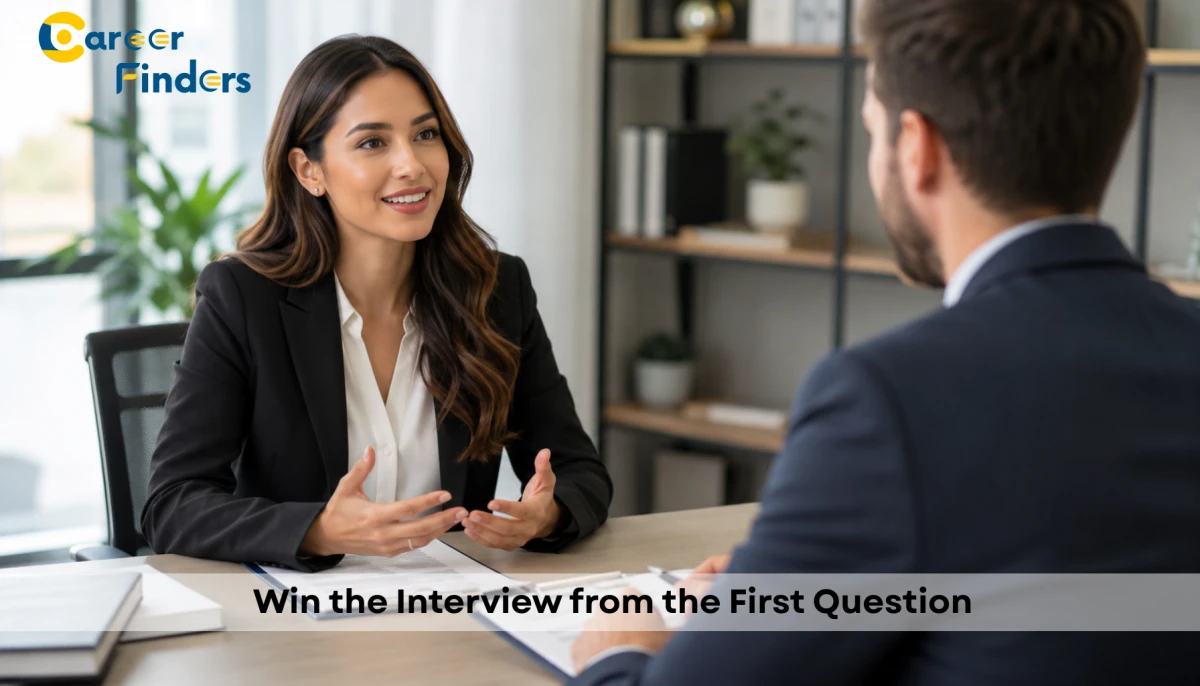
The question “Tell me about yourself” sounds simple, but for many job seekers, it feels like the hardest part of the interview. It is usually the first question an interviewer asks, and the way you answer it can shape the rest of the conversation.
Many candidates make the mistake of giving a long personal story, repeating their full resume, or becoming too nervous and saying very little. But this question is not really about your personal life. It is your chance to introduce yourself professionally, show confidence, and explain why you are a good fit for the role.
A strong answer can help you make a positive first impression and give the interviewer a clear reason to keep listening.
First impressions are powerful in job interviews. Before the interviewer looks deeply into your skills or experience, they notice how you communicate, how confident you sound, and how clearly you understand the role.
When an interviewer asks, “Tell me about yourself,” they are not asking for every detail of your life. They want to know:
Can you explain yourself clearly?
Do you understand your strengths?
Are you relevant to this job?
Can you communicate with confidence?
Your answer should help them see your professional identity within the first minute.
The interviewer wants a short and meaningful summary of who you are as a candidate. They want to hear about your background, your key skills, your achievements, and why you are interested in the role.
A good answer connects your past experience with the job you are applying for. Even if you are a fresher or have limited experience, you can still talk about your education, projects, internships, volunteer work, or skills you have developed.
The goal is not to sound perfect. The goal is to sound prepared, honest, and relevant.
The best way to answer this question is to follow a simple structure:
Present: Who you are right now
Past: What experience, education, or skills you have
Future: Why you are interested in this role
This structure keeps your answer clear and professional. It also stops you from speaking too much or going off-topic.
For example, instead of saying random things about your life, you can say:
“I recently completed my studies in business administration, where I developed a strong interest in customer service and communication. During my course, I worked on several group projects that helped me improve my teamwork, problem-solving, and presentation skills. I am now looking for an opportunity where I can apply these skills in a professional environment and continue learning.”
This answer is simple, focused, and job-related.
Your answer should usually be around 45 to 90 seconds. If it is too short, it may sound unprepared. If it is too long, the interviewer may lose interest.
Avoid giving too many personal details unless they are directly relevant to the job. You do not need to talk about your family, hobbies, or childhood unless the interviewer specifically asks.
Focus on your professional journey, your skills, and your motivation.
This question is a great chance to show your strongest qualities. Think about what makes you suitable for the role.
Are you good at communication?
Are you organised?
Do you learn quickly?
Do you have customer service experience?
Are you confident with technology?
Have you worked in a team before?
Choose two or three strengths and include them naturally in your answer.
For example:
“I would describe myself as someone who is organised, quick to learn, and comfortable working with people. In my previous role, I often handled customer enquiries and helped solve issues in a calm and professional way.”
This sounds confident without feeling forced.
One of the biggest mistakes candidates make is giving a general answer that could fit any job. A better answer should connect directly to the role you are applying for.
Before the interview, read the job description carefully. Notice what the employer is looking for. Then include those skills in your answer.
For example, if the job requires communication and teamwork, mention examples that show those qualities. If the role needs attention to detail, explain how you have used that skill before.
This makes your answer more relevant and shows that you understand the position.
“I recently completed my studies in marketing, and I have developed a strong interest in digital communication and customer engagement. During my course, I worked on projects involving social media planning, content ideas, and basic market research. These projects helped me build confidence in teamwork, communication, and problem-solving. I am now looking for an opportunity where I can learn from experienced professionals and contribute with a positive attitude and fresh ideas.”
“I have three years of experience in customer service, where I handled client enquiries, resolved complaints, and supported daily operations. Over time, I have built strong communication, problem-solving, and time management skills. I enjoy working with people and helping create a positive customer experience. I am now looking for a role where I can use my experience, take on more responsibility, and continue growing professionally.”
“My background is in administration, where I developed strong organisational, communication, and coordination skills. Recently, I have become very interested in recruitment and HR because I enjoy working with people and understanding how the right talent fits the right role. I have started learning more about HR processes and workplace communication, and I am now looking for an opportunity where I can bring my existing skills into a new career path.”
Do not memorise your answer word-for-word. It can make you sound robotic. Instead, remember the key points and speak naturally.
Avoid negative statements like “I don’t have much experience” or “I am not sure what to say.” Even if you are new, focus on what you can offer.
Do not speak too casually. An interview is professional, so your answer should be friendly but respectful.
Also, avoid making your answer too long. The interviewer will ask more questions later, so you do not need to explain everything at once.
Preparation makes a big difference. Write your answer once, then practise saying it out loud. This will help you sound more confident and natural.
You can practise in front of a mirror, record yourself, or ask a friend to listen. The more comfortable you become with your answer, the easier it will be to speak clearly during the interview.
Remember, confidence does not mean speaking perfectly. It means knowing your value and explaining it clearly.
The question “Tell me about yourself” is more than just an opening question. It is your first opportunity to show who you are as a professional candidate.
A strong answer should be short, clear, and connected to the job. Talk about your background, your key skills, and why you are interested in the role. Whether you are a fresher, experienced candidate, or changing careers, the right answer can help you start the interview with confidence.
Your first impression matters. Make it simple, professional, and memorable.