

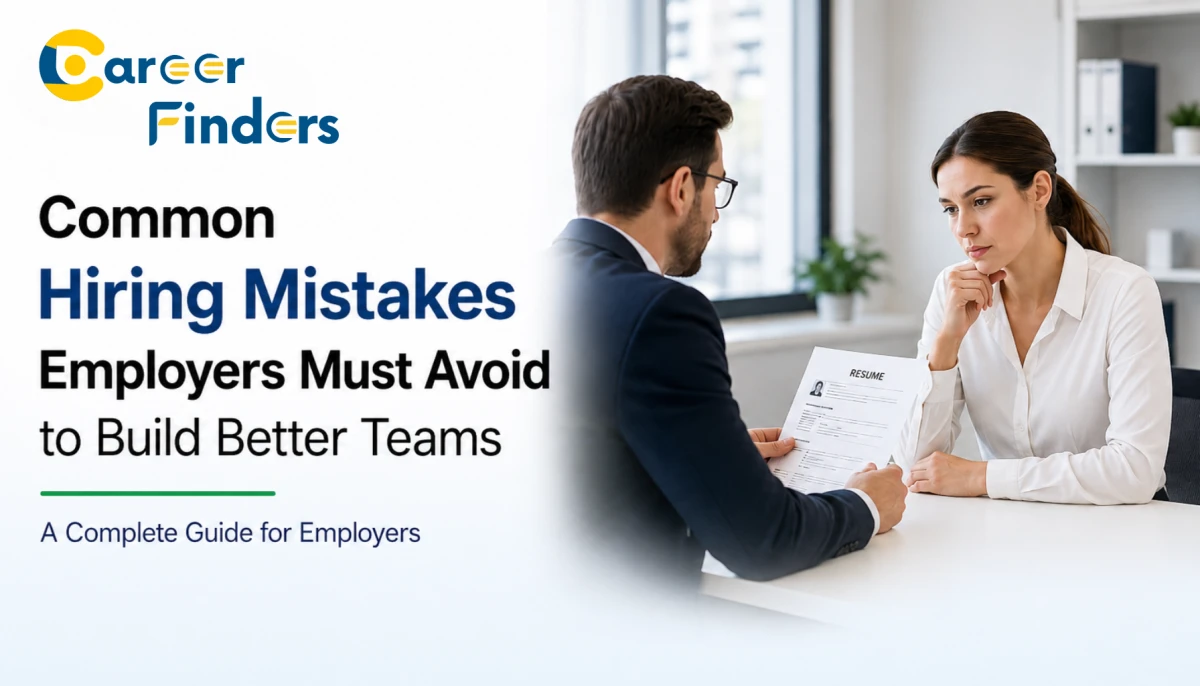
Hiring the right person is one of the most important decisions any business can make. A strong employee can improve productivity, support team culture and help the company grow. But a poor hiring decision can cost time, money and confidence inside the workplace.
Many employers believe hiring is simple: post a job, receive resumes, interview candidates and choose one person. In reality, recruitment is much more detailed. A successful hiring process needs planning, clear communication, fair evaluation and proper onboarding.
At CareerFinders.co, we share practical career and employment insights for employers, students, job seekers and professionals. This guide explains the most common hiring mistakes employers make and how they can avoid them to build better teams.
One of the most common hiring mistakes is creating a job description that does not clearly explain the role. If the job post is confusing, too short or filled with unnecessary requirements, the wrong candidates may apply while strong candidates may ignore the opportunity.
A good job description should clearly mention the job title, main responsibilities, required skills, experience level, work location and salary details if possible. Employers should avoid using complicated words or unrealistic expectations that make the role look unclear.
When the job description is clear, candidates can understand whether they are suitable for the role. This saves time for both the employer and the applicant.
Experience is important, but it should not be the only factor in hiring. Many employers reject good candidates because they do not have the exact number of years mentioned in the job post. This can be a mistake, especially when the candidate has strong skills, a positive attitude and the ability to learn quickly.
Employers should also look at communication skills, problem-solving ability, adaptability and willingness to grow. For students and fresh graduates, internships, projects, volunteer work and practical training can also show potential.
A candidate with less experience but strong learning ability can sometimes become a better long-term employee than someone who only looks strong on paper.
Technical skills help a candidate perform job tasks, but soft skills help them work well with others. Many hiring mistakes happen when employers focus only on qualifications and ignore communication, teamwork, time management and attitude.
A person may have the right degree or work experience, but if they cannot communicate properly, accept feedback or work with the team, problems can appear later.
During interviews, employers should ask questions that test how candidates handle pressure, solve problems and deal with workplace situations. This gives a better understanding of the person behind the resume.
Many businesses hire quickly because they urgently need someone. While fast hiring is sometimes necessary, rushing the process can lead to poor decisions. Employers may skip important steps, ignore red flags or select the first available person instead of the right person.
A structured hiring process should include resume screening, proper interviews, skill checks, reference checks and final review. Even if the company needs someone quickly, the process should still be organised.
Hiring the wrong person quickly can create bigger problems later, including low performance, team stress and repeated recruitment costs.
Interviews are a major part of recruitment, but many employers ask only basic questions. Questions like “Tell me about yourself” or “Why should we hire you?” are useful, but they are not enough to understand whether someone is suitable for the role.
Employers should ask role-specific, behavioural and practical questions. For example, they can ask how the candidate handled a difficult deadline, managed a customer issue or worked in a team project.
Better interview questions help employers understand the candidate’s skills, thinking style and workplace behaviour.
Candidate experience is often ignored, but it plays a big role in employer branding. If candidates do not receive updates, are kept waiting too long or are treated poorly during interviews, they may lose interest in the company.
Even rejected candidates remember how they were treated. A poor hiring experience can damage the company’s reputation and reduce future applications.
Employers should communicate clearly, respect interview timings and give updates where possible. A professional and respectful hiring process creates a positive impression of the business.
A resume is useful, but it does not tell the full story. Some strong candidates may not have perfect resumes, while some well-written resumes may not reflect real ability.
Employers should use resumes as the first step, not the final decision. Interviews, work samples, skill assessments and reference checks can give a clearer picture of the candidate.
For job seekers and students, this also shows why a clear and honest resume is important. A good resume should highlight skills, achievements and relevant experience in a simple way.
Another mistake employers make is offering a salary that does not match the role, skills or market expectations. If the salary is too low, strong candidates may not apply or may leave soon after joining.
Employers should research salary trends and offer fair compensation where possible. If the salary budget is limited, they can highlight other benefits such as flexible work, training, career growth, learning opportunities and a supportive workplace.
A fair offer shows candidates that the company values their time, skills and future contribution.
Reference checks are sometimes treated as a formality, but they can help employers avoid hiring mistakes. A reference check can provide useful information about the candidate’s reliability, work ethic, communication style and past performance.
Employers should ask practical and respectful questions. They can ask about the candidate’s strengths, teamwork, punctuality and ability to handle responsibilities.
This step helps employers make a more confident final decision.
Hiring does not end when the candidate accepts the job offer. Onboarding is the next important step. If a new employee does not receive proper guidance, they may feel confused, unsupported or disconnected from the team.
A good onboarding process should include company introduction, role expectations, training, access to tools, team introductions and regular check-ins.
Strong onboarding helps new employees settle faster, understand their responsibilities and perform with more confidence.
Hiring mistakes can affect business growth, team performance and workplace culture. When employers hire without planning, they may face high turnover, poor productivity and repeated recruitment costs.
A better hiring process helps businesses attract stronger candidates, improve employee retention and build a more stable team.
Employers should focus on clarity, fairness and long-term value. The best hire is not always the person who can start immediately. The best hire is the person who can perform well, grow with the company and support the team’s success.
This guide is not only useful for employers. Job seekers and students can also learn from these hiring mistakes. When candidates understand how employers make decisions, they can prepare better resumes, improve interview answers and present their skills more confidently.
For example, if employers value communication and problem-solving, candidates should show these qualities during interviews. If employers look for practical skills, students should focus on internships, projects and real-world experience.
This is why career guidance is important for both sides of the job market.
Hiring the right employee requires more than checking resumes and conducting interviews. Employers need a clear process, strong communication, fair evaluation and proper onboarding.
Common hiring mistakes such as unclear job descriptions, rushed decisions, weak interviews and poor candidate experience can affect both the business and the people applying for jobs.
By avoiding these mistakes, employers can build stronger teams and create a better recruitment process. At the same time, students and job seekers can use this knowledge to understand what companies really look for during hiring.
For more hiring insights, career advice and job market updates, visit CareerFinders.co and explore practical guides for employers, students, job seekers and professionals.
(1) Clear job descriptions help employers define duties, responsibilities and expectations before hiring candidates.
https://www.shrm.org/topics-tools/tools/job-descriptions
(2) Employers should standardize interviews by asking candidates the same questions and using work tests for fairer hiring decisions.
https://www.hbs.edu/recruiting/guides-and-stories/improve-decision-making-avoid-pitfalls-in-hiring
(3) Hiring managers should avoid asking personal, illegal or sensitive questions during interviews to reduce bias and legal risk.
https://www.shrm.org/topics-tools/news/talent-acquisition/interview-questions-get-hr-trouble
(4) Candidate experience matters because the recruitment process can influence whether a candidate accepts a job offer.
https://www.gallup.com/workplace/651650/lasting-impact-exceptional-candidate-experiences.aspx
(5) Poor onboarding can affect retention, and Gallup found that only a small share of employees strongly agree their company does onboarding well.
https://www.gallup.com/workplace/235121/why-onboarding-experience-key-retention.aspx
(6) Reference checks help employers understand a candidate’s previous performance, work behaviour and employment history before final hiring.
https://www.randstad.in/hr-news/attracting-recruiting-talent/what-a-reference-check-why-it-important/
#CareerFinders #HiringMistakes #HiringTips #RecruitmentTips #EmployerBranding #CandidateExperience #TalentAcquisition #HRInsights #HiringProcess #JobDescription #InterviewTips #Onboarding #EmployeeRetention #WorkplaceCulture #CareerAdvice