By Rohan Kulkarni | 11 June 2026 | Careerfinders.co
The modern job search has entered a new stage. A few years ago, candidates were worried about applicant tracking systems, keyword matching, and whether recruiters would even open their resumes. Today, the challenge has become bigger. Job seekers are using AI to write resumes, improve cover letters, polish LinkedIn profiles, and practise interview answers. Employers are also using AI to screen applications, compare skills, identify red flags, and move faster through large candidate pools.
On paper, this sounds like progress. Candidates can apply faster. Recruiters can shortlist faster. Employers can manage hiring at scale. But in reality, one major problem is becoming clear: hiring is facing a trust gap.
When every resume sounds polished, every cover letter looks professional, and every interview answer can be rehearsed with AI, employers are asking a simple question: How do we know what is real?
That is why today’s job market is not only about who has the best resume. It is about who has the most credible professional story.
For job seekers, AI can be useful. It can help fix grammar, improve structure, remove weak wording, and make a resume easier to read. It can help candidates understand job descriptions and prepare better interview answers.
But AI also creates a risk. Some candidates are using it to make their experience sound bigger than it really is. A basic role becomes “strategic operations leadership.” A small task becomes “end-to-end project ownership.” A simple software exposure becomes “advanced technical expertise.”
This may help a resume pass the first stage, but it can create problems later. Recruiters and hiring managers are becoming more alert. They are looking for consistency between the resume, LinkedIn profile, interview answers, references, and real work examples.
A recent Wall Street Journal report said more companies are using deeper or informal reference checks because AI-generated resumes and interview preparation are making it harder to judge candidates from application material alone. The report also noted that employers want more genuine insight into how candidates actually worked with previous teams and managers.
This is important for every job seeker. AI can improve your presentation, but it cannot replace real performance.
A resume tells employers what you claim to have done. Your reputation tells them whether people trust you to do it again.
Reputation is built through your work habits, communication style, reliability, attitude, teamwork, problem-solving ability, and how you handle pressure. These things are difficult to fake over time.
For example, a candidate may write that they are a “strong team player,” but a former manager may confirm whether they actually supported the team during busy periods. A resume may say “excellent communication skills,” but an interview may reveal whether the candidate can explain ideas clearly. A LinkedIn profile may look impressive, but real references may show whether the person delivered consistently.
This does not mean job seekers should be afraid. It means they should become more intentional. Every job, internship, freelance project, volunteer role, and professional interaction can become part of a stronger career reputation.
If you are early in your career, reputation may come from small things: completing work on time, asking good questions, learning quickly, responding professionally, and showing up consistently. If you are experienced, reputation comes from results, leadership, accountability, and the way people remember working with you.
A strong resume still matters. Employers need a clear summary of your skills, experience, education, certifications, achievements, and career direction. But the resume should not be written like a fantasy version of your career.
The best resumes are clear, specific, and verifiable.
Instead of writing:
“I am a highly motivated professional with strong leadership and communication skills.”
A better line would be:
“Supported a five-member operations team by coordinating daily schedules, preparing reports, and improving response time for customer queries.”
The second line is stronger because it explains what you actually did. It gives the employer something concrete to understand.
Job seekers should focus on proof. Mention tools used, tasks handled, numbers improved, customers supported, projects completed, deadlines met, or teams assisted. You do not need to exaggerate. You need to be specific.
A simple but honest resume is better than an impressive resume that falls apart during the interview.
Australia’s labour market continues to show opportunities, but candidates need to apply with better strategy. The Australian Bureau of Statistics reported that job vacancies increased by 2.7% in the three months to February 2026, though vacancies were still 28.6% below the May 2022 peak.
This means the market is not closed, but it is more selective than the post-pandemic hiring boom. Employers are still hiring, but they are more careful about skills, fit, reliability, and long-term value.
Jobs and Skills Australia also released its March 2026 Occupation Shortage Report, which analyses shortage pressures across the labour market using employer recruitment data. Shortage pressure does not mean every applicant will automatically get hired. It means employers may face difficulty filling some roles with suitable candidates.
That word “suitable” matters. A candidate must still show the right skills, documents, communication, experience, and attitude for the role.
AI is no longer only a technology-sector topic. It is becoming part of administration, marketing, recruitment, customer service, education, finance, logistics, design, content, and business operations.
For candidates, this creates an opportunity. You do not need to become an AI engineer to benefit from AI skills. You need to show that you can use modern tools responsibly and productively.
A marketing assistant can use AI to plan content calendars and analyse audience behaviour. An office administrator can use AI to summarise documents and organise information. A recruiter can use AI to compare applications and write better outreach messages. A student can use AI to prepare for interviews and understand industry expectations.
The important thing is to be honest about your level. Do not write “AI expert” if you only use ChatGPT casually. Instead, say something practical, such as:
“Used AI tools to draft reports, summarise meeting notes, research market trends, and improve workflow efficiency.”
That sounds realistic and useful.
Recent labour-market discussions show that AI disruption is expected to affect several occupations, especially roles with repetitive or automatable tasks, while other roles may become AI-enhanced rather than fully replaced. This is why candidates should focus on adaptability. The future belongs to people who can combine human judgement with digital capability.
Employers are not only hiring a skill set. They are hiring a person who will work with their team, handle responsibilities, represent the business, and solve real problems.
This is why trust is becoming central to recruitment.
A candidate may have the right qualification but poor communication. Another candidate may have slightly less experience but a stronger attitude, better preparation, and clearer examples. In many cases, employers choose the person who feels more reliable.
Trust is built during every stage of the hiring process:
The old approach was simple: apply to as many jobs as possible and wait for replies. That approach is becoming weaker because many candidates are doing the same thing with AI. Employers may receive more applications, but not necessarily better applications.
The better approach is targeted job searching.
Choose roles that actually match your experience, skills, location, visa status, availability, and career direction. Read the job description properly. Understand what the employer is asking for. Then adjust your resume honestly for that role.
This does not mean creating fake experience. It means highlighting the most relevant parts of your real experience.
For example, if the role is customer service, show communication, problem-solving, complaint handling, and teamwork. If the role is administration, show organisation, reporting, scheduling, data entry, and software skills. If the role is hospitality, show speed, reliability, customer care, food safety, and shift flexibility.
A targeted resume feels more relevant. A generic resume feels lazy.
AI can help you practise interview questions, but you still need real stories.
Employers often ask behavioural questions like:
These questions are designed to test real experience. If your answer sounds too perfect, vague, or scripted, it may create doubt.
Use the STAR method: Situation, Task, Action, Result.
For example:
“In my previous retail role, we had a busy weekend shift where two staff members were absent. I helped manage customer queues, handled billing support, and coordinated with the floor team. As a result, we reduced waiting time and avoided customer complaints during peak hours.”
This answer is simple, but it sounds real. That is what employers want.
Your LinkedIn profile is no longer just an online resume. It is part of your professional identity.
Before hiring, many employers search candidates online. They may check whether your LinkedIn profile matches your resume, whether you have professional activity, and whether your career story looks consistent.
You do not need to post every day. But your profile should be clean and updated.
Add a professional headline. Write a simple summary. Keep your job history aligned with your resume. Add skills that are relevant to your target role. Follow companies and industries that match your career goals. Engage professionally with useful content.
A strong LinkedIn profile supports your application. A messy or outdated profile can create confusion.
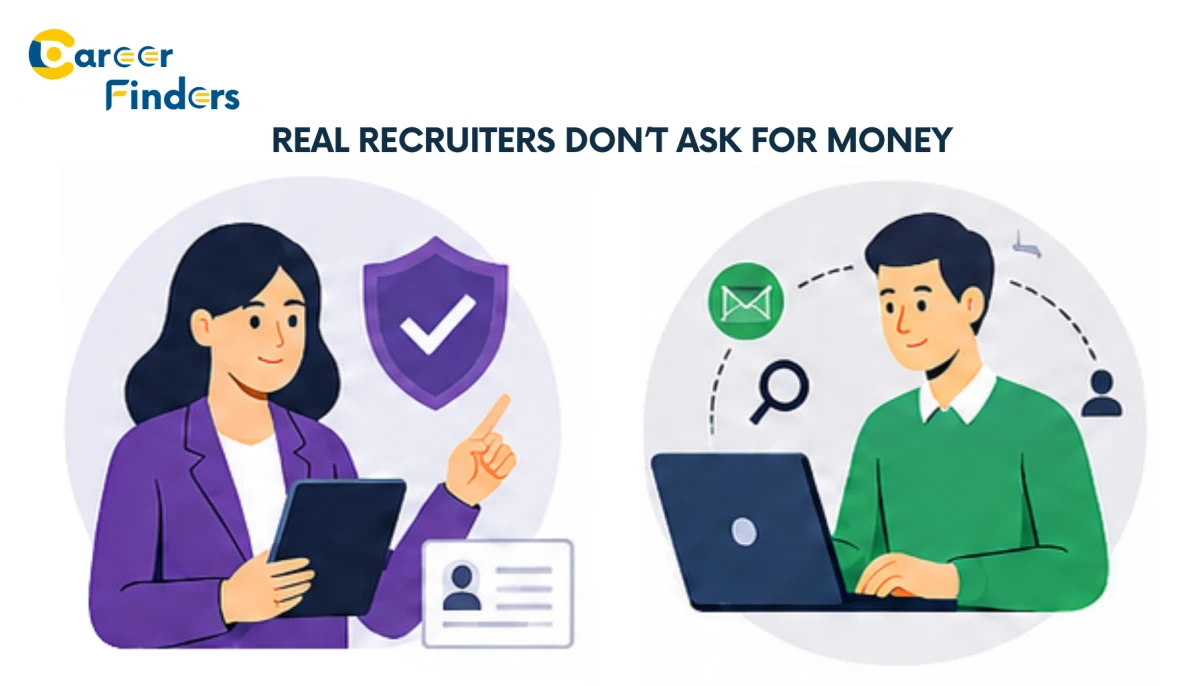
Many candidates think references matter only at the end. In the current hiring environment, references can become a major trust signal.
Before applying seriously, job seekers should reconnect with previous managers, supervisors, teachers, trainers, or clients who can speak positively about their work.
Do not list someone as a reference without asking them. Tell them what type of roles you are applying for. Share your updated resume. Remind them of the work you did together.
Good references are not only about praise. They are about credibility.
A strong reference can confirm your reliability, attitude, communication, punctuality, and work quality. These are things AI cannot create for you.
If you are a student, graduate, or early-career worker, you may feel that you do not have enough experience. But employers are not always looking for long experience in entry-level roles. They are looking for potential.
You can show potential through:
Even a small project can become powerful if you explain it properly. Instead of saying “completed a college project,” explain what the project was, what your role was, what tools you used, and what you learned.
Employers want to see that you can think, learn, and contribute.
Experienced candidates face a different challenge. They may have strong work history, but they still need to show relevance.
If you have been in the workforce for many years, do not only list responsibilities. Show impact. Employers want to know what changed because of your work.
Did you improve a process? Train staff? Reduce errors? Increase sales? Improve customer satisfaction? Handle compliance? Manage a team? Support business growth?
Also, experienced candidates should show that they are still adaptable. In a changing market, employers value people who can learn new tools, adjust to new systems, and work with younger or cross-functional teams.
Experience is powerful, but only when it feels current.
AI has changed the way people write resumes, apply for jobs, and prepare for interviews. But it has not removed the human side of hiring.
Employers still want people they can trust. They want candidates who are honest, prepared, skilled, reliable, and able to work well with others.
A polished resume may help you get noticed. A clear interview may help you move forward. But a strong professional reputation can help you win trust.
For job seekers, the message is simple: use AI wisely, but do not let it replace authenticity. Build real skills. Keep your resume honest. Prepare real examples. Maintain strong references. Improve your LinkedIn profile. Apply with focus.
The future of hiring will not reward the person who looks perfect on paper. It will reward the person who can prove they are ready for the role.